

Auxillary Motors

Rotomotive Auxiliary Motors are engineered for railway applications to power essential onboard systems that support locomotive and rolling stock operation. These rugged electric motors are designed for continuous duty and dependable performance in demanding rail environments, helping drive auxiliary equipment such as blowers, compressors, HVAC systems, ventilation and other support systems common in train coaches and locomotives. Railway auxiliary motors play a vital role in ensuring stable, efficient electrical power delivery to non-traction systems across the train.

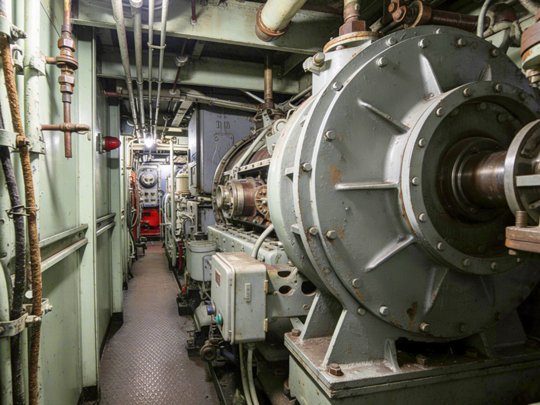
Auxillary Motors

Key Advantages

01)
Robust construction to withstand vibration, thermal and operational stresses typical of rail service.
02)
High reliability and consistent performance for extended duty cycles
03)
Engineered for efficient power delivery in auxiliary roles that complement traction systems.
03)
Versatile design suitable for multiple auxiliary functions on locomotives and train coaches

Technical Details

  • Motor Type: AC 3-Phase Induction Motor (commonly IE2 efficiency)
  • Power Rating: Variable (e.g., 3.5 kW to 100 kW)
  • Voltage: 290-500 V AC
  • Speed: Approx. 2900-3000 RPM (e.g., 2905 RPM)
  • Protection Class: IP54 or IP55 (Dust protected/water jet proof)
  • Insulation Class: Class F
  • Duty Cycle: S1 (Continuous operation)
  • Cooling Method: TEFC (Totally Enclosed Fan Cooled)

Applications

Auxillary Motors Application